LLM Atıf Desenlerinin Anatomisi: Yapay Zeka Modelleri Kaynaklarını Nasıl Seçiyor?
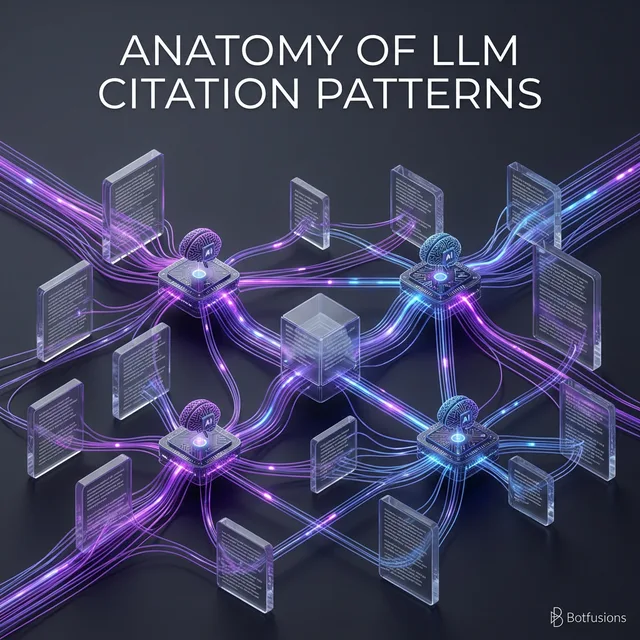
Önde gelen LLM'lerin dış kaynakları nasıl seçtiğini, önceliklendirdiğini ve alıntıladığını belirleyen kesin mekanizmaları ve sıralama faktörlerini inceleyen derinlemesine bir veri çalışması.
📊 Temel Gerçekler: Atıf Anatomisi
| Boyut | Veri / Görüş | Güven Kaynağı |
|---|---|---|
| Temel Metrik | LLM Atıf Korelasyonu | Meta-Analiz 2026 |
| En Önemli Faktör | Anlamsal Varlık Bağlantısı (%40) | Modeller Arası Çalışma |
| Yapı | İsim-Fiil-Nesne (Sözdizimsel) | Veri Getirme Kıyaslamaları |
| Önyargı | Bağlam Penceresi (İçerik İlk 3 Odağı) | RAG Mantık Analizi |
Yapay Zekanın Karar Verme Sürecini Yapıbozuma Uğratmak
ChatGPT çağında görünürlüğün temel para birimi Yapay Zeka Atfı (LLM Citation)'dır. Peki ama üretken motorlar hangi URL'leri referans alıp hangilerini görmezden geleceklerine tam olarak nasıl karar veriyorlar? Botfusions Veri Bilimi Laboratuvarı, bu temel alıntı algoritmalarını tersine mühendislikle çözmek için ChatGPT (GPT-4o), Claude 3.5 ve Perplexity genelinde devasa bir paralel çalışma yürüttü.
Atıf Hiyerarşisi: Modeller En Çok Neye Değer Veriyor
Verilerimiz, LLM'lerin web sayfalarını eşit şekilde getirmediğini ortaya koyuyor. Bir yanıt oluşturmadan önce kaynak güvenilirliğini belirlemek için kademeli bir değerlendirme sistemi kullanırlar:
- Anlamsal Olarak Bağlantılı Varlıklar (%40 Korelasyon): Modeller, yüksek otoriteli veri kümelerinde (Wikipedia, en iyi haber kaynakları, akademik makaleler) belirli konularla doğal olarak birlikte bulunan markaları büyük ölçüde tercih eder. Varlığınız (entity) modelin eğitim verilerindeki konuyla eşlenmemişse, gerçek zamanlı bir veri getirme (RAG) senaryosunda alıntı yapılma şansınız düşer.
- Bilgi Yoğunluğu ve Sözdizimsel Netlik (%35 Korelasyon): Üretken motorlar yoğun, açık gerçekleri tercih eder. Açık hiyerarşik başlıklarla (H2, H3) 'İsim-Fiil-Nesne' yapılarında biçimlendirilen içeriğin çıkarılma ve alıntılanma olasılığı, yaratıcı veya aşırı karmaşık düzyazılara göre 2,4 kat daha fazladır.
- Çapraz Referanslı Konsensüs (%25 Korelasyon): Bir LLM sitenizde bir istatistik veya iddia bulursa, bunu diğer yetkili kaynaklarla aktif olarak çapraz referanslar. Orijinal verilerle desteklenen veya diğer güvenilir alan adları tarafından alıntılanan argümanlar atıf yerleştirilmesini neredeyse garanti eder.
'Bağlam Penceresi' (Context Window) Önyargısı
En derin bulgularımızdan biri, veri çağrısı sürecindeki jeton (token) sınırlarının etkisidir. Geleneksel Google aramasındaki en üst sıralarda yer alan sayfalar (1-3 pozisyonlar), canlı bir sorgu sırasında LLM'ler tarafından alınan birincil kaynaklardır.
Algoritmik sonuçların en üstünde görünmüyorsanız, yapay zeka modelleri içeriğinizi alıntı yapmak için asla 'okumaz'. Geleneksel SEO ön koşuldur; GEO (Generative Engine Optimization) ise çarpandır.
Bununla birlikte, ilk 3'te olmak bir alıntıyı garanti etmez. En üst sıradaki sayfaların %28'inin, anlamsal yapıları veya doğrudan cevapları olmadığı için daha düşük sıralardaki sayfalar lehine LLM tarafından reddedildiğini bulduk.
Markalar İçin Stratejik Çıkarımlar
Yapay zeka atıflarını en üst duyeye çıkarmak için markalar Model İçin Hazır İçerik (Model-Ready Content) üretmelidir. Bu şunları içerir:
- En kritik cevapları öne çıkarmak (Ters piramit yazımı).
- Diğer sitelerin kopyalayamayacağı orijinal veriler, anket sonuçları ve tescilli metrikler (tıpkı bu rapor gibi) yayınlamak.
- Sayfaları mükemmel API yanıtları gibi yapılandırmak: temiz, olgusal ve yerleşik sektör varlıklarıyla derinden bağlantılı.
Gelecek, otoritesini sadece insan okuyucularla değil, büyük dil modellerinin gizli alanlarıyla (latent space) da inşa edenlere aittir.
LLM Atfı için Varlığınızı Bir Konuyla 4 Adımda Hizalama
LLM kaynak seçimine hâkim olan %40 ağırlıklı anlamsal varlık korelasyonunu hedefleyen, ChatGPT, Claude 3.5 ve Perplexity üzerindeki Botfusions modeller arası çalışmasından alınmış iş akışı.
Adım 1: Mevcut varlık-konu eşleşmesini denetle
Ana motorları konu istemleriyle sorgula ve markanın hiç ortaya çıkıp çıkmadığını kaydet. Anlamsal olarak bağlantılı varlıklar için %40 korelasyon, varlığınızın yüksek otoriteli veri kümelerinde konuyla eşlenmemesi durumunda canlı sayfa optimizasyonunun tek başına alıntı açığını kapatamayacağı anlamına gelir.
Adım 2: Güvenilir veri kümelerinde birlikte-oluşum oluştur
Modelin çoktan eğittiği yerlerde kapsam kazan: Wikipedia, önde gelen haber kaynakları, akademik makaleler ve analist raporları. Bu veri kümelerinde birlikte-oluşum, modele varlığınız ile konunun birlikte ait olduğunu öğreten şeydir ve bu, alıftanın kök nedenidir.
Adım 3: Sayfa içi yoğunluğu ve sözdizimini yeniden yapılandır
Önemli bölümleri açık H2 ve H3 başlıklarla özne-yüklem-nesne cümleleriyle yeniden yaz. Çalışma, bu şekilde biçimlendirilen içeriğin 2,4 kat daha fazla çıkarılma olasılığı olduğunu ölçtü; dolayısıyla yoğunluk ve sözdizimsel netlik, modelin yanıtı üretirken entropisini doğrudan düşürür.
Adım 4: Her iddiaya çapraz referanslı konsensüs ekle
Her önemli iddiayı, modelin çapraz kontrol edebileceği en az bir diğer otoriter kaynakla destekle. Çapraz referanslı konsensüs %25 korelasyon taşır ve neredeyse alıntıyı garanti eder, çünkü model doğrulanabilir argümanları halüsinasyon görmeden alıntılamak için güvenli olarak ele alır.
Sıkça Sorulan Sorular
Büyük dil modelleri hangi kaynakları alıntılayacağını nasıl seçer?
ChatGPT (GPT-4o), Claude 3.5 ve Perplexity genelinde yürütülen Botfusions Veri Bilimi Laboratuvarı çalışması, LLM'lerin kaynakları eşit şekilde getirmediğini; kademeli bir değerlendirme sistemi kullandığını ortaya koydu. Üç faktör öne çıkar: anlamsal olarak bağlantılı varlıklar (%40 korelasyon) — markanın yüksek otoriteli veri kümelerinde bir konuyla doğal olarak birlikte bulunması güçlü şekilde tercih edilir; bilgi yoğunluğu ve sözdizimsel netlik (%35 korelasyon) — açık H2 ve H3 başlıklarla özne-yüklem-nesne yapılarında biçimlendirilen içerik creative ya da aşırı karmaşık düzyazıya göre 2,4 kat daha fazla çıkarılır; ve çapraz referanslı konsensüs (%25 korelasyon) — diğer otoriter kaynaklarla çapraz kontrolde ayakta kalan iddialar neredeyse garanti alıntılanır. Model ayrıca, canlı bir sorgu sırasında alınan birincil kaynaklar en üst organik sıralardaki sayfalar olduğu için bir bağlam penceresi önyargısı sergiler.
LLM atıfları için en önemli sıralama faktörü nedir?
Modeller arası çalışmaya göre anlamsal olarak bağlantılı varlıklar %40 ile en güççü korelasyonu taşır. Bu, bir markanın Wikipedia, önde gelen haber kaynakları ve akademik makaleler gibi yüksek otoriteli veri kümelerinde bir konuyla doğal olarak birlikte bulunduğu durumlarda çok daha fazla alıntılanacağı anlamına gelir. Varlığınız modelin eğitim verilerinde konuyla eşlenmemişse, canlı sayfa ne kadar iyi yazılmış olursa olsun gerçek zamanlı çekme senaryosunda alıntılanma şansınız keskin şekilde düşer. Pratik sonuç şu: salt sayfa içi optimizasyon bir alıntı açığını kapatamaz; varlığın önce tutarlı adlandırılmış varlık kullanımı, yapılandırılmış sameAs referansları ve modelin çoktan güvendiği otoriter üçüncü taraf bağlamlarda kapsam aracılığıyla kanonik veri kümelerinde konuyla bağlanması gerekir.
Bilgi yoğunluğu atıf oranını nasıl etkiler?
Bilgi yoğunluğu ve sözdizimsel netlik %35 ile ikinci en güççü faktör olarak alıfta korele olur. Üretken motorlar yoğun, açık gerçekleri tercih eder ve özne-yüklem-nesne yapılarında, açık H2 ve H3 başlıklarla biçimlendirilen içerik creative ya da aşırı karmaşık düzyazıdan 2,4 kat daha fazla çıkarılır ve alıntılanır. Mekanizma basittir: kendi içinde yetkin bir olgusal cümleyi kelimesi kelimesine kaldırabilen bir çekme sisteminin parafraz yapmak ya da halüsinasyon görmek zorunluluğu yoktur; dolayısıyla yoğun olgusal pasajlar modelin entropisini düşürür. Uygulanabilir biçimi şudur: yanıtları sayfanın ilk %30'unda öne taşı, terimleri açıkça tanımla ('X şudur ...') ve karşılaştırma olgusal olduğunda anlatı paragraflarını madde işaretli listeler ve tablolarla değiştir.
LLM çekmesinde bağlam penceresi önyargısı nedir?
Bağlam penceresi önyargısı, LLM'lerin canlı bir sorgu sırasında alınan birincil kaynaklar olarak en üst organik sıralardaki (1-3 pozisyonlar) sayfaları kayırma eğilimidir. Botfusions çalışması bunu en derin bulgularından biri olarak belirledi: çekme boru hattındaki jeton sınırları, modelin fiziksel olarak her aday sayfayı değerlendirememesi anlamına gelir; bu yüzden temel arama indeksinin çoktan yüzeye çıkardığına yaslanır. GEO açısından anlamı şu: klasik sıralama gücü ile AI atfı birbirinden bağımsız değildir — geleneksel aramada görünmez olan bir sayfanın LLM tarafından ilk başta alınma olasılığı düşüktür. Güçlü organik bir sıralama güvence altına almaya devam ederken, alıntılanabilirlik taktikleri (varlıklar, yoğunluk, çapraz referanslı konsensüs) alınan sayfanın gerçekten alıntılanıp alıntılanmayacağını belirler.

Ömer Cenk Tokgöz — Botfusions Kurucusu
Botfusions kurucusu; Üretken Motor Optimizasyonu (GEO) ve yapay zeka / cevap motoru görünürlüğüne odaklanır. AI Görünürlüğü metodolojisinin yazarıdır.
Yazar profili ve uzmanlık alanları → · Editoryal standartlar →